Candle accessories
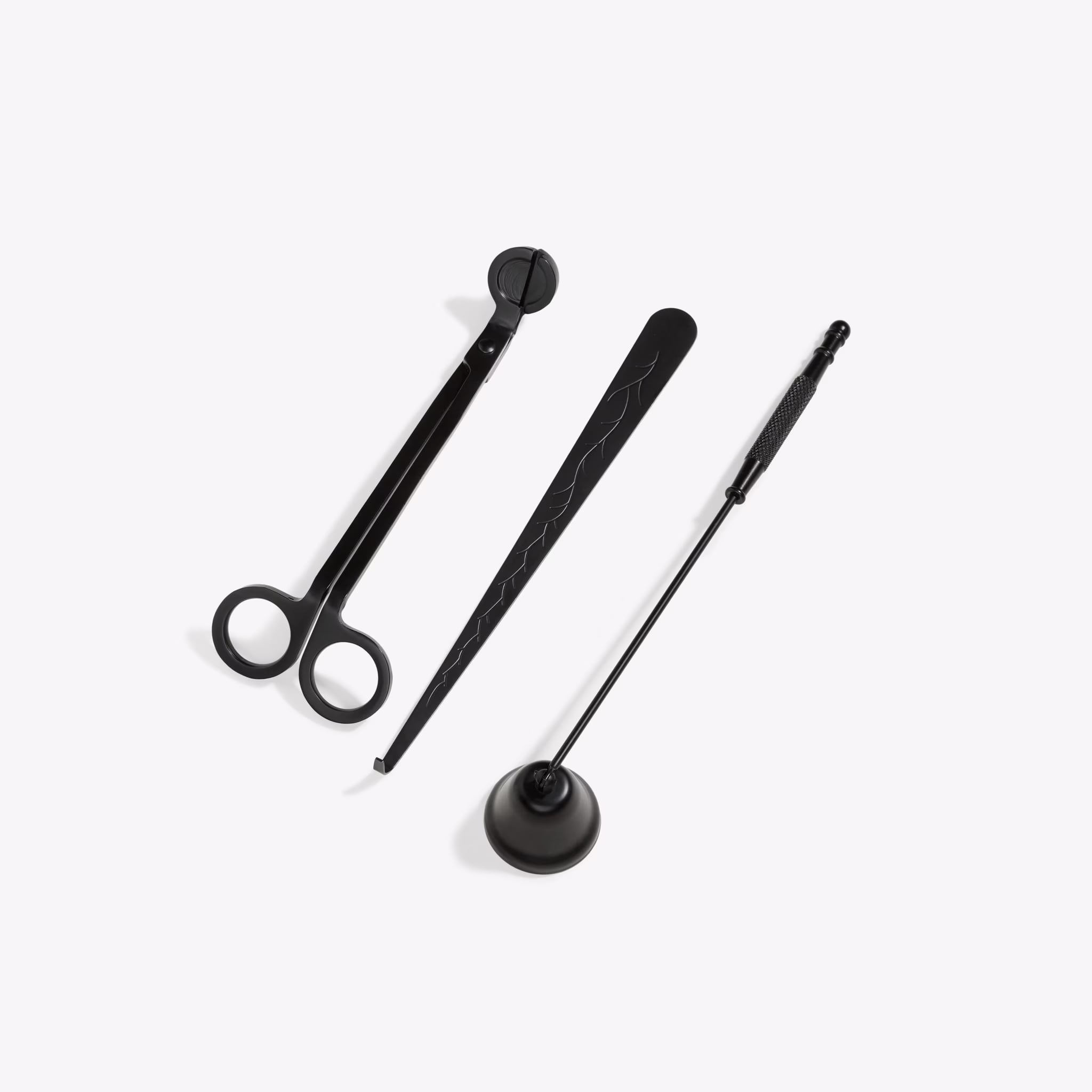
Candle accessories are the small tools that keep a candle burning evenly to the very end: a wick trimmer, a snuffer, a wick dipper and matches.
All accessories
- Order by 14:00 on a working day - same-day dispatch
- Locker 12,90 PLN, free from 149 PLN
- 30-day returns

- Order by 14:00 on a working day - same-day dispatch
- Locker 12,90 PLN, free from 149 PLN
- 30-day returns
We choose them for our soy candles with cotton wicks.
Secure payments
BLIK, instant transfer, bank transfer
Order by 14:00 - same-day dispatch
Locker 12,90 zł, courier 16,90 zł, free from 149 zł
30-day returns
no questions, refund within 14 days
Made in Poland
a small-batch manufactory
More about candle accessories
Why candle accessories matter
Candle accessories decide how a candle burns after the first lighting. Soy wax burns evenly only when the wick is the right length and the flame is put out without a puff of air. A neglected wick smokes, the flame flickers and the glass darkens from the inside.
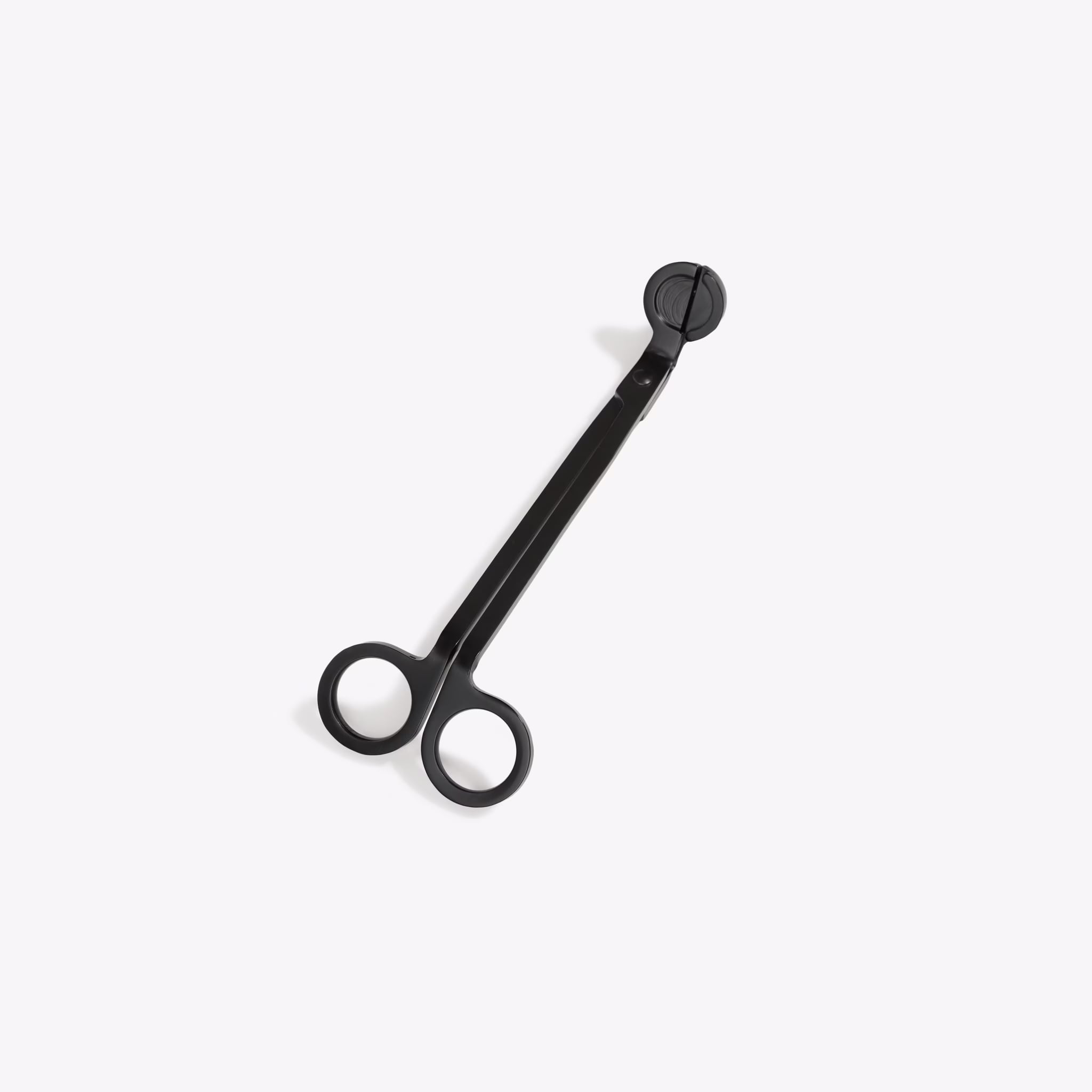
A cotton wick grows longer after every burn and gathers a carbon "mushroom" at the tip. Before the next lighting, trim it to about 5 mm - fingers will not do, the jar is narrow and the wick sits low in the wax. That is the job of a wick trimmer: ours is 17 cm long, stainless steel with a black finish and a 90-degree blade, so it reaches the wick at the bottom of the jar.
A snuffer - a small bell on a long handle - cuts the flame off from oxygen. The flame goes out without a puff of air, and wax does not spatter onto the glass. The wick still smoulders for a moment and gives off a brief wisp of smoke - measurements show it after a snuffer, too (Pagels et al., 2009).
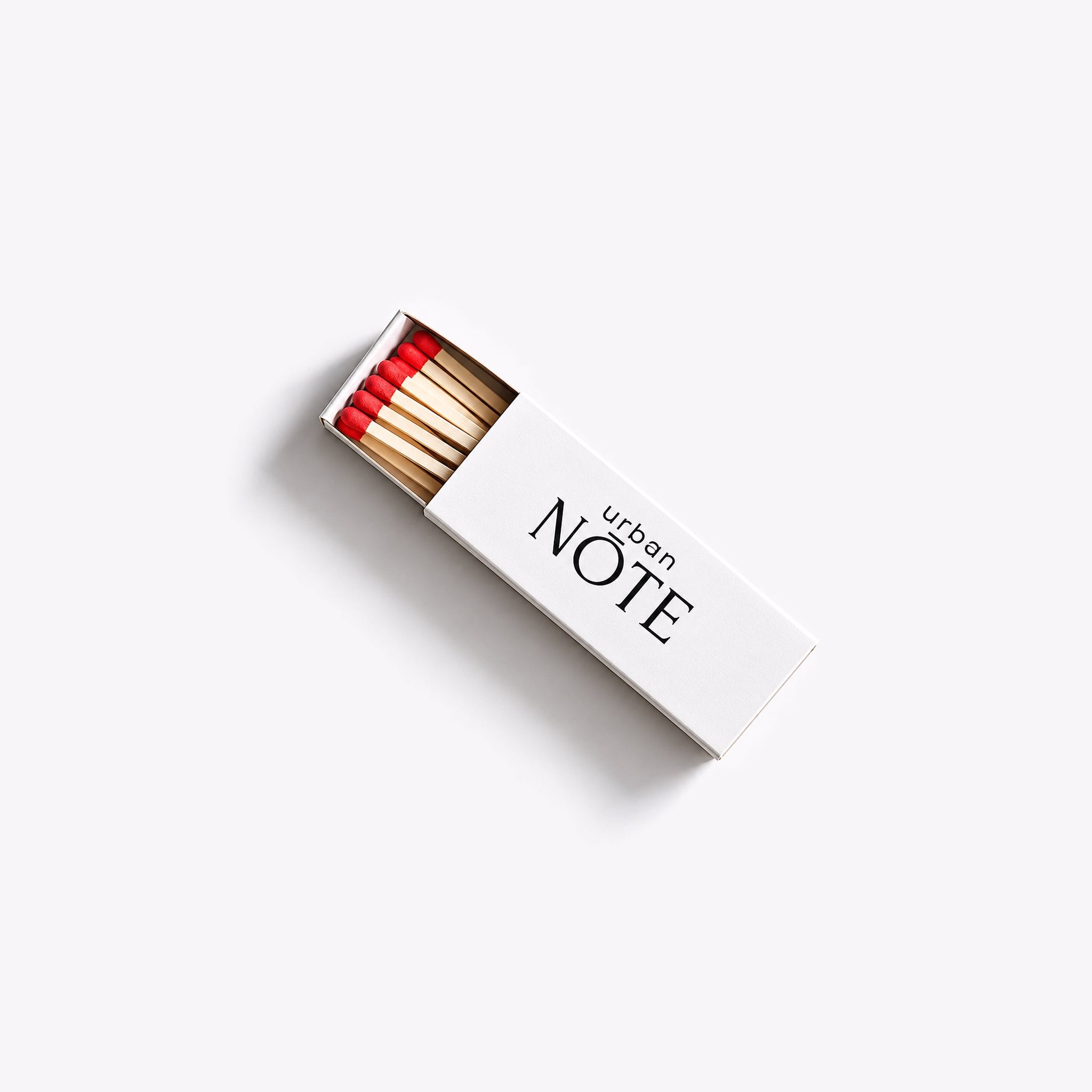
Matches complete the set. Ours come in a small UrbanNote logo box (5.5 x 2.5 cm, about 10 matches) that fits a pocket and sits beside the candle on the table.
A candle base - what to stand a candle on
A base protects the surface from the warmth of the glass and from drops of wax. The jar heats up from the flame, especially when little wax is left, so do not stand a candle directly on lacquered wood, a tablecloth or plastic.
We do not sell bases, and you do not need a special one: a ceramic saucer, a stone coaster or a metal tray will do. The base should be flat, stable and wider than the bottom of the jar - our candles are 6 cm (120 g), 7 cm (190 g) and 9 cm (350 g) across.
Where the candle stands matters as much as what it stands on. Keep it away from draughts, curtains and shelves above the flame, out of reach of children and pets. A draught bends the flame, and then the candle smokes and burns unevenly.
Accessories for soy candles - what differs from paraffin
Accessories for soy candles are the same tools as for paraffin candles: a trimmer, a snuffer, a dipper and matches. The difference lies in the wax. Soy wax melts at a lower temperature and forms a soft, creamy pool, so most depends on the first burn and on the length of the wick.
The first time you light the candle, let it burn until the wax has melted from edge to edge. Put it out earlier and the wax remembers a narrow ring around the wick: every later burn sinks into it, and unmelted wax is left along the sides.
A cotton wick in soy wax mushrooms faster, so a trimmer is an everyday tool here, not a decoration. To put the flame out, a snuffer or a dipper is better than blowing - soft soy wax spatters easily onto the glass.
Materials and care
The wick trimmer is stainless steel with a black finish. After each use, wipe the blades with a dry, soft cloth to remove soot and leftover wax. Do not put it in the dishwasher or scrub it, so the finish lasts longer.
The snuffer and the wick dipper in the care set share the same matte black finish. Wipe wax off the dipper with a paper towel while it is still soft. Soot comes out of the snuffer bell with a dry cloth.
Keep matches somewhere dry, away from a burning candle and out of reach of children. Strike away from yourself and move the match away from your face before bringing it to the wick.
Tools like these last for years. All they need is to go back to their place beside the candle - then trimming the wick before lighting and snuffing the flame at the end become a habit.
The wick dipper
A wick dipper is a thin metal rod with a bent tip. It does one thing: it tips the burning wick over and dips it in the pool of molten wax. The flame goes out at once, with no spatter on the glass. A brief puff of smoke above the wick still appears - measurements after this kind of extinguishing show it (Andersen et al., 2021). The wick comes back upright already soaked in wax, so the next lighting is easier than after blowing the candle out.
The difference from a snuffer is mechanical. A snuffer cuts off oxygen with a bell held over the flame; a dipper drowns the flame in its own fuel. The result is similar, but on a wooden wick dipping is awkward: a wax-flooded strip of wood is harder to light next time. So the dipper belongs to cotton-wick candles, while wood is better served by a snuffer.
The wick dipper comes in our care set, together with a trimmer and a snuffer - all three in a matte black finish, chosen for a cotton wick. To compare the two ways of putting a candle out, read how a candle snuffer works. Reach for the dipper when you want to put the flame out without a puff of air and have the wick ready for the next evening.
How to set up a candle ritual
In Japanese tradition the art of appreciating scent is called kōdō - the way of fragrance. At home there is no need for names: a fixed time in the evening, the candle always in the same place, and the trimmer, snuffer and matches beside it.
Burn time depends on how you look after the wick. Our 120 g candle burns for about 30 hours, the 190 g for about 40 and the 350 g for up to 70 - with the wick trimmed before every lighting and a full melt pool on the first burn. A neglected wick shortens that time and leaves soot on the glass.
The order is simple: trim the wick, strike the match away from the candle and bring it to the tip of the wick, and at the end of the evening put the flame out with the snuffer or the dipper. Half a minute at the start, half a minute at the end.
Frequently asked questions
Why trim a candle wick?
A wick grows longer with every burn and mushrooms at the tip. Trimmed to about 5 mm before every lighting, it gives a calm, even flame with no soot on the glass, and the candle burns for its full time.
Is a candle snuffer worth it?
Yes. Blowing a candle out scatters hot wax onto the sides of the jar. A snuffer - a small bell on a handle - cuts off the oxygen, so the flame goes out without a puff of air or spatter, and the jar stays clean. A brief wisp of smoke from the smouldering wick still appears - measurements show it after a snuffer, too (Pagels et al., 2009).
Which matches are best for candles?
Ours come in a small UrbanNote logo box (5.5 x 2.5 cm, about 10 matches) - a small addition to a candle that fits in a pocket. When the wax is low in the jar, hold the match by its end and bring it to the wick at an angle, or use a long match or a lighter with an extended tip.
Can I use UrbanNote accessories with other brands of candle?
Yes. The 17 cm trimmer with a 90-degree blade reaches the wick in jars of a typical width, and the snuffer works with any candle in glass. The wick dipper works best with cotton wicks.
Do you need a wick dipper?
It is not essential, but it helps. On a cotton wick a dipper puts the flame out without a puff of air and soaks the wick in wax on the way, which makes the next lighting easier. On a wooden wick (UrbanNote candles do not have one - all use cotton) dipping floods the strip of wood and makes it harder to light, so a snuffer works better there. The dipper comes in our care set, with a trimmer and a snuffer.
UrbanNote soy candles
Tools are nothing without a candle to use them on.
Soy candles named after Polish cities. Hand-poured from soy wax in our Warsaw manufactory, each with a cotton wick.
View soy candles